CozySort: Coins
- 4.4
- Rating
- 500.00K
- Installs
- Free
- Price

 Analysis by App-foxy
CozySort: Coins is the kind of puzzle game I can open without preparing myself for a serious session. Its central idea is easy to understand: sort coins, combine matching pieces, and work toward a win. That simplicity gives it an inviting first impression, but the real question is whether the presentation and pacing make those actions satisfying after the novelty fades. In my experience, the answer is mostly yes, especially when I want a calm, low-pressure activity rather than a demanding brainteaser.
Developed by UniRise Studio, this free puzzle game is aimed at Everyone and runs on Android devices using version 7.0 or later. It has already passed half a million installs and holds a 4.4 average from roughly 2.1 thousand ratings, which fits my impression of a game designed for broad accessibility rather than a narrow audience of expert puzzle players. The current version is 1.22.1, and the game was released on December 9, 2025.
The store’s short label is simply CozySort, while the longer summary points toward its loop of coins, sorting, merging, and winning. That description is brief, but it captures the basic appeal. I do not need to learn a complicated control scheme or remember a long story before playing. I can begin quickly, understand the immediate objective, and decide for myself whether I want to play for a few minutes or continue through a longer run.
You May Also Like

 Blood Strike: 2.5 Anniversary
Blood Strike’s Loadouts Turn Every Drop Into a Tactical Gamble
A close look at Blood Strike’s custom loadouts: how fast access to signature weapons reshapes its battle royale rhythm, rewards preparation, and narrows the gap between fights.

 Pandora - Music & Podcasts
Pandora’s Music Is Easy to Start, but Harder to Recover
Pandora’s strength is its low-effort path from a seed to a station. Its weak spot is how much confidence it asks you to place in connection, setup, and quiet recovery.

 8 Ball Pool
 Is Built on Rivalries, Rematches, and Routine
A close look at the rivalries, rematches, shared routines, and unanswered safety questions that turn a quick pool match into a persistent mobile community.

 Samsung Music
’s Quiet Strength Is Playing What You Already Own
Its reach comes less from spectacle than from dependable access to a personal library. That simplicity is both the app’s strongest retention engine and its ceiling.

 AccuWeather: Weather Radar
AccuWeather Review: A Quick, Clear Forecast for Everyday Decisions
For everyday plans, the best forecast is the one you can understand quickly. AccuWeather makes rain timing, radar, and local conditions easy to act on, with a few trade-offs.

 Hill Climb Racing
Why Hill Climb Racing Still Turns Crashes Into One More Run
A tiny car, a bumpy hill and one more upgrade: Hill Climb Racing keeps resurfacing because its simple chaos makes every near-miss feel personal.
More From Our News Desk
View All News


How the presentation turns a simple puzzle into a mood
I like how the gentle presentation gives the coin puzzle a distinct mood, but that atmosphere works best when it supports clear decisions rather than simply slowing everything down. This section looks at the balance between visual comfort and useful focus, including how a brief pause to scan the board can make a session feel more intentional.
A first impression built around gentle focus
My first reaction was that the game wants to feel comfortable before it wants to feel clever. That matters because sorting and merging are familiar puzzle ingredients. Without a pleasant visual identity, the activity could easily become a dry exercise in moving objects around. Here, the cozy framing gives those small decisions a softer context and makes the opening moments feel approachable.
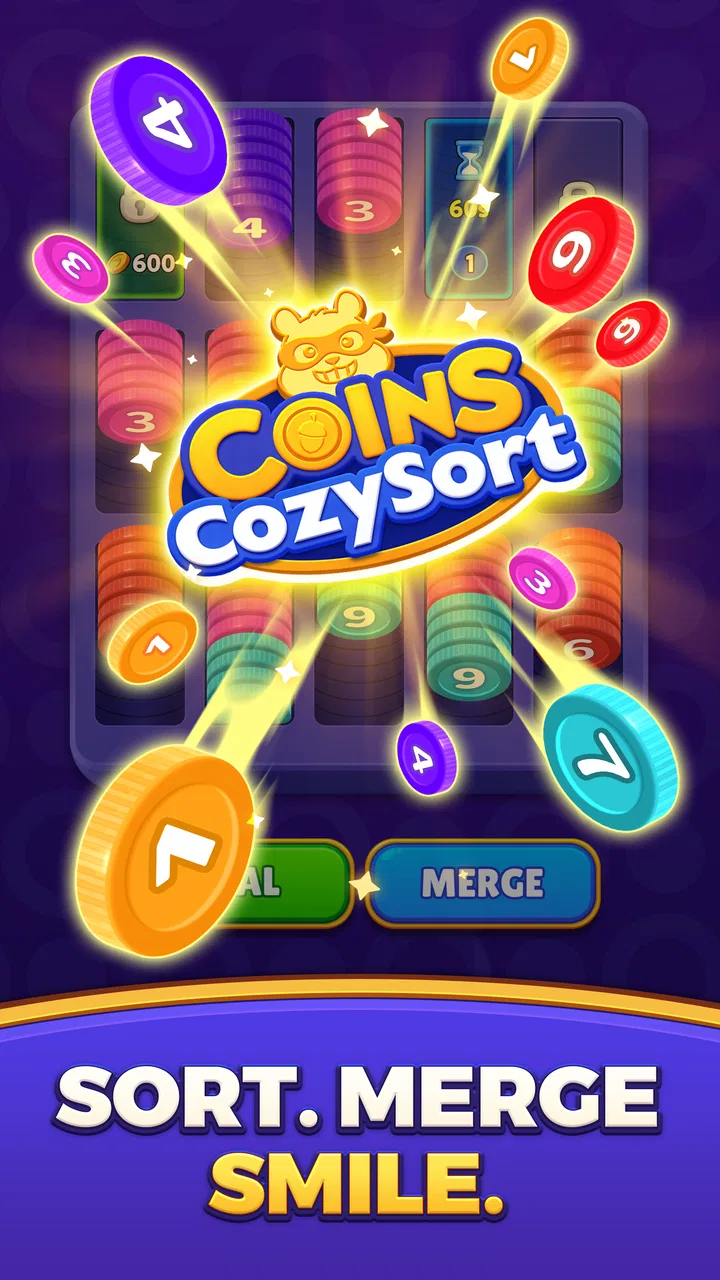
The coin theme also gives the board a clear visual vocabulary. Coins are naturally readable as separate objects, and their circular shapes make matching and grouping easy to follow. I never felt that the basic interaction was hidden behind decorative clutter. For a casual puzzle, that clarity is more important than elaborate spectacle: I should be able to see what belongs together and understand the consequence of a move at a glance.
That accessibility makes the game a good fit for short breaks. I can imagine playing it while waiting for an appointment, during a quiet commute, or at the end of the day when I want something interactive but not emotionally intense. It does not demand the same commitment as a story-driven adventure, and it is less mentally exhausting than a difficult logic game that expects every move to be planned several steps ahead.
There is a trade-off, though. Players who need constant novelty may find the opening too restrained. The appeal comes from refining a small loop, not from immediately revealing a large world or a dramatic narrative. If your ideal puzzle game is full of surprising rules, elaborate stages, or frequent mechanical twists, the modest first impression may feel underpowered.
The visual language keeps the board understandable
The strongest part of the art direction is its relationship with the mechanics. A cozy style is useful here only if it supports recognition, and the coin-based presentation gives each action a tangible identity. Sorting feels like arranging a collection, while merging suggests gradual improvement rather than abrupt transformation. Those associations make the loop easier to settle into.
I also appreciate that the setting does not appear to compete with the board. The game’s mood is conveyed through the overall treatment of the activity rather than through a heavy story that interrupts every decision. That keeps the focus on the puzzle while still giving the session a distinct personality. It is a sensible choice for a title whose main pleasure comes from repetition with small changes.
One useful way to approach the visuals is to treat them as information, not just decoration. Before moving anything, I look for the groups that are closest to completion and the spaces that could become valuable later. The coin theme encourages me to think in terms of order and accumulation. That is more helpful than making random moves simply because a combination is available.
My practical advice is to pause briefly after each merge instead of immediately tapping the next attractive option. In a sorting game, a move that looks rewarding now can leave awkward pieces in the wrong places. The calm presentation makes this pause feel natural, and it is one of the easiest ways to turn the game from casual tapping into deliberate puzzle play.
Sound and rhythm matter more than complexity
The audio side of a cozy puzzle has a specific job: it should give actions a sense of completion without making the session tiring. In this kind of game, sorting, combining, and clearing progress need a readable rhythm. When those moments are paced well, the player develops a small satisfying cycle of intention, action, and confirmation.
I found that the game works best when I allow its rhythm to guide my attention instead of rushing through the board. The coin actions become small beats. I inspect the layout, make a choice, watch the result, and then reassess. That rhythm supports the relaxed mood because it gives each decision a little space. It also helps prevent the common mistake of treating every available match as automatically correct.
This is where the game separates itself from faster, more aggressive puzzle alternatives. A score-chasing title may push me toward rapid chains and constant pressure. CozySort: Coins is more appealing when I want the satisfaction of organizing things at a measured pace. The experience is less about showing reflexes and more about maintaining a tidy mental picture of the board.
That pacing will not suit everyone. If you prefer puzzles that reward speed, loud feedback, or escalating urgency, the gentle tempo may seem too quiet. I would choose a more competitive match-based game for a quick burst of adrenaline. I would choose this one when I want my attention occupied without feeling chased by the clock.
Why the mood supports the mechanics
The art, sound, and pacing work because they all point toward the same emotional target. The game asks me to organize, combine, and improve rather than survive, fight, or react under pressure. That coherence is easy to overlook, but it is what makes the simple rules feel intentional. The presentation does not promise one type of experience and deliver another.
For everyday use, that consistency is valuable. After a tiring workday, I may not want a game that requires a long explanation or demands perfect concentration. I can use a few rounds as a transition between tasks. The sorting loop gives my mind something concrete to do, while the softer presentation keeps the activity from becoming another source of stress.
There is also a useful distinction between relaxing and mindless. The game can be relaxing, but it still rewards attention. If I stop examining the arrangement and make moves automatically, I am more likely to create a less useful layout. The pleasant mood should not be mistaken for a complete absence of strategy. Its best sessions combine a calm tempo with modest but meaningful planning.
Where the coin loop fits among puzzle alternatives
Compared with a traditional match-three game, this title feels more orderly and less dependent on creating spectacular chains. Match-three games often emphasize quick pattern recognition and board-clearing excitement. Here, the appeal is closer to arranging a collection and deciding which combinations improve the available space. That makes it a better choice for players who enjoy organization more than explosive reactions.
Compared with a classic number-merging puzzle, the coin theme gives the activity a more tactile identity. Number games can be wonderfully strategic, but their abstract grids may feel detached. The coin presentation makes progress easier to imagine as a physical accumulation. On the other hand, players who love deep mathematical planning may find the presentation more important than the underlying challenge.
It also differs from hidden-object or item-sorting games that focus mainly on visual relaxation. The merge element gives choices more consequence than simply placing objects in matching categories. I need to think about what a combination does to the remaining arrangement. That added layer is the reason I would return to it over a purely decorative sorting activity.
The best comparison depends on what I need at the moment. For competition, speed, or complex long-term strategy, another puzzle format may be stronger. For a portable game built around calm organization and incremental progress, this one has a clear place. Its main strength is the fit between a simple coin loop and a deliberately gentle mood.
Small decisions that improve a session
The first useful habit is to avoid spending every available opportunity immediately. A visible match can be attractive, but keeping the board flexible may be more valuable than collecting a quick merge. I try to examine the surrounding spaces first. If a move blocks several possible arrangements, I wait and consider whether another combination will create a cleaner result.
The second habit is to use the board as a planning surface rather than a reaction test. I mentally separate pieces that are close to combining from pieces that are merely convenient at the moment. This helps me distinguish progress from activity. A move can look busy while doing very little for the overall position.
The third is to change how I play depending on my available time. In a short break, I focus on safe improvements and avoid experimenting with complicated arrangements. In a longer session, I can accept a less obvious move and watch how it changes the board. This makes the same basic mechanics feel different without requiring the game to become more complicated.
A fourth insight is that the cozy presentation can be used as a pacing tool. I do not need to rush because the game’s appeal is not built around frantic input. Taking a moment to inspect the result of a merge improves my decisions and makes the feedback feel more satisfying. That is a small adjustment, but it changes the experience from idle tapping into a more thoughtful routine.
Free access and the question of spending
The game is free to download, which makes it easy to try without committing money at the start. That is important for a relaxed puzzle because the core question is personal: will the sorting and merging loop hold my attention? I can answer that through actual play rather than relying on a trailer or a short description.
There are in-app purchases ranging from $0.99 to $99.99 per item. That broad range is worth keeping in mind before playing, especially if the game becomes part of a daily routine. I would approach optional spending cautiously and decide in advance whether I want the game to remain a completely free pastime. A cozy atmosphere can make repeated purchases feel harmless, so setting a personal limit is sensible.
For families, the Everyone rating makes the game broadly approachable, but I would still explain the purchase system to younger players before handing over a device. The age rating describes the content audience, not a spending plan. If the phone or tablet is shared, checking purchase controls is a practical step that prevents an otherwise relaxing game from becoming an unpleasant surprise.
Who should play it, and who should skip it
I recommend it to players who enjoy arranging objects, making incremental improvements, and taking puzzle decisions at a comfortable pace. It is especially suitable for someone who wants a light game between responsibilities rather than a title that demands a long uninterrupted session. The low entry barrier also makes it approachable for people who do not usually play complex strategy games.
I would also suggest it to fans of cozy presentation who still want a little decision-making underneath the calm surface. The coin theme provides enough structure to make each move feel purposeful, while the sorting loop remains easy to understand. It is a good option when visual order and gentle repetition are part of the appeal.
I would skip it if I needed a strong narrative, competitive rankings, intense time pressure, or a large variety of unrelated mechanics. The game’s identity comes from doing a small number of things coherently. That focus is a strength for the right player, but it can feel narrow if I am looking for constant surprises.
It may also be a poor fit for anyone who dislikes repetition. Even when the board changes, the basic pleasure remains tied to sorting and merging. Players who quickly tire of refining one loop may prefer a puzzle collection with several distinct modes. Choosing that alternative would not mean this game is weak; it would simply reflect a different tolerance for repetition.
My final view after settling into the rhythm
CozySort: Coins succeeds because its presentation understands what its mechanics need. The coin theme makes the board legible, the gentle art direction gives sorting a pleasant identity, and the measured rhythm encourages me to think before acting. None of that replaces good puzzle design, but it makes the central loop easier to enjoy repeatedly.
My main reservation is that the focused structure will not satisfy players searching for dramatic progression or demanding complexity. The game is at its best when I accept its modest scale and use it as a calm mental break. I also keep the in-app purchase range in mind and prefer to decide my spending boundaries before the game becomes part of my routine.
For me, this is a recommendation with a clear condition: choose it for quiet organization, not high-intensity challenge. UniRise Studio has created a free puzzle game that turns a familiar sort-and-merge idea into a coherent mood rather than dressing it up with unrelated distractions. If that sounds like the kind of small, focused activity you want on your phone, I think it is worth trying. It is most enjoyable when you let the board breathe, plan one move ahead, and treat the calm pacing as part of the puzzle.
FAQs for CozySort: Coins
01What are the main features of CozySort: Coins?
CozySort: Coins is designed to help coin collectors manage and organize their collections efficiently. The app includes features like coin cataloging, detailed information entry, photographic documentation, and market value tracking. Users can also access community forums for discussions and trading, making it a comprehensive tool for both novice and experienced collectors.
02Is CozySort: Coins user-friendly for beginners?
Yes, CozySort: Coins is designed with an intuitive interface that makes it easy for beginners to navigate. The app includes tutorials and step-by-step guides to help new users understand how to catalog and manage their collections. Additionally, it offers customizable features to suit individual preferences, ensuring a smooth user experience.
03Are there any subscription fees or in-app purchases?
CozySort: Coins offers a free version with basic features, but to access advanced functionalities such as cloud storage, detailed market analytics, and premium community access, users may need to opt for a subscription plan. The app provides various pricing tiers to accommodate different user needs, ensuring flexibility and affordability.
04How does the app ensure the security of my coin collection data?
CozySort: Coins prioritizes user privacy and data security. It employs encryption protocols to protect user information and offers secure cloud storage options for backup. Users can also enable two-factor authentication for added security. Regular updates ensure the app remains secure against potential threats, providing peace of mind for collectors.
05Can I use CozySort: Coins offline?
Yes, CozySort: Coins can be used offline to catalog and manage your coin collection. However, features like cloud synchronization, market value updates, and community interactions require an internet connection. This offline capability ensures users can access essential features without interruption, even when connectivity is limited.
Pros
- Intuitive interface for easy navigation.
- Supports a wide range of global currencies.
- Offline mode for tracking without internet.
- Secure with encryption for data safety.
- Regular updates with new features.
Cons
- Limited customization for advanced users.
- Some features locked behind a paywall.
- Occasional sync issues between devices.
- Ads can be intrusive at times.
- Requires account creation to access features.

CozySort: Coins
Gallery